Themes

History of research

The history of research draws on scientific travel accounts and later ethnographies to provide an overview of the different periods of Siberia’s exploration.

Ethnographic research in Northeastern Siberia in the 18th and 19th centuries

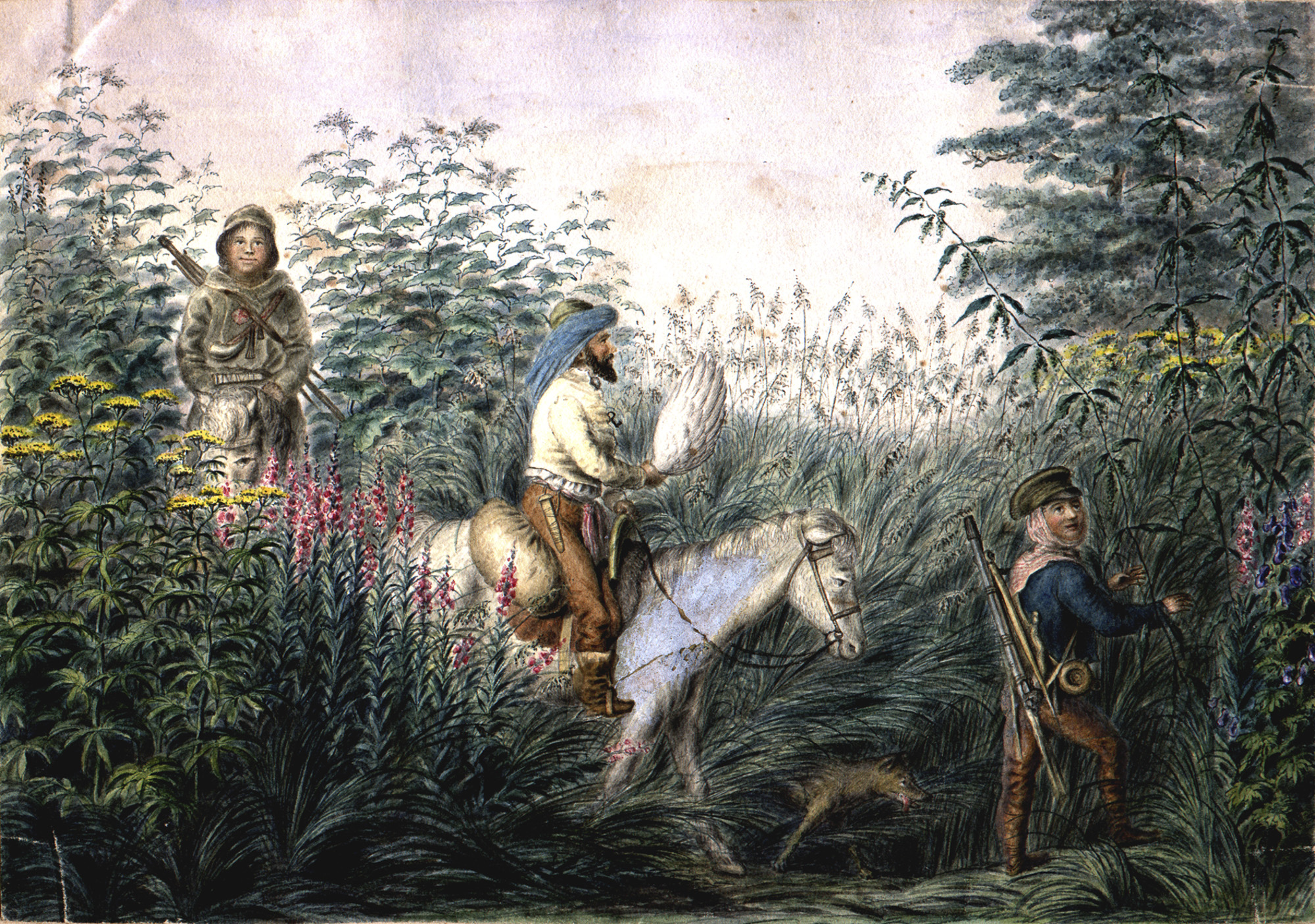
As part of the commercial and scientific exploration of the northeastern parts of the Russian Empire, many scholars traveled to the Kamchatka peninsula. Apart from Russian scholars, many were of German or German-Baltic origin, and were sent there by the Russian government. The reports and accounts of Georg Wilhelm Steller in the 18th century, as well as those of Adelbert von Chamisso, Karl von Ditmar (First Part, Second Part), Adolph Erman, Johann Karl Ehrenfried Kegel, Friedrich Heinrich von Kittlitz (see illustration to the right), Georg Heinrich von Langsdorff, Gerhard Baron von Maydell and Carl Heinrich Merck in the 19th century are still considered to be among the most valuable documents on the ethnography of the indigenous peoples of that part of the world.

This period of the history of exploration was discussed during a seminar at the Foundation for Siberian Cultures from historical, literary, ethnographic and scientific perspectives. The results have been published in the edited volumes Kul'tury i landshafty Severo-vostoka Azii and Reisen an den Rand des russischen Reichs, as well as Russian periodicals. Copies of lithographs and watercolours from these early works have been presented in exhibitions in Kamchatka.
Ethnographic research in Northeastern Siberia in the 18th and 19th centuries

Ethnological research in Northeastern Siberia at the turn of the 20th century

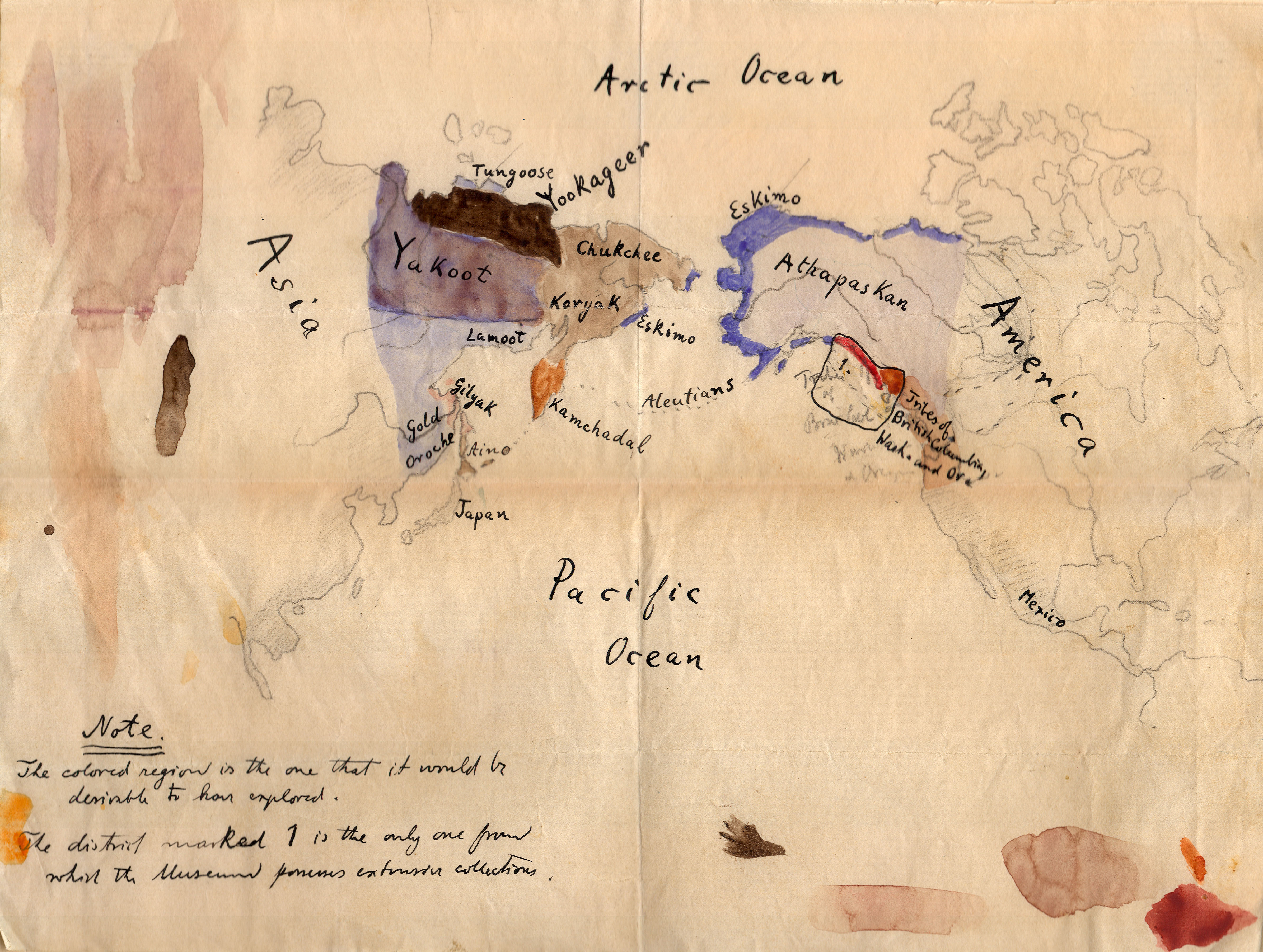
This period is documented thanks to the comprehensive ethnographies created as anthropology developed into a scientific discipline in its own right, due to the influence of Franz Boas. As a result of the Jesup North Pacific Expedition he organised, important monographs by Waldemar Jochelson on the Yakut, Yukaghir and Koryak were published, as well as Waldemar Bogoras’ substantial ethnography of the Chukchi and his Chukchee Mythology. Jochelson’s early studies have been collected recently in an edited volume. An edition of his later, unpublished ethnography of the Itelmen is currently in preparation. This period of research was also the subject of edited volumes dedicated to the Jesup North Pacific Expedition, and to the comprehensive contribution by Jochelson, Bogoras and Shternberg.

Ethnological research in Northeastern Siberia at the turn of the 20th century

Ethnological research in Siberia during Soviet times

The early phase of Soviet ethnography was largely dominated by the so-called Leningrad School and its prominent representatives Waldemar Bogoras and Lev Shternberg. Later, Soviet ethnological discourse and fieldwork were mainly determined by the Institute of Ethnography of the Russian Academy of Science in Moscow.

Ethnological research in Siberia during Soviet times

Ethnological research in Siberia during Perestroika

The impact of Perestroika on the indigenous peoples of the Russian North was studied by the Max Planck Institute for Social Anthropology. Erich Kasten was in charge of the team working on Siberia in 2000-2002. He organized the conferences "Postsocialisms in the Russian North" (2000) and "A World of Cultures: Culture as Property 13 in Anthropological Perspective" (2002). The results have been published in the edited volumes People and the Land, Properties of Culture – Culture as Property und Rebuilding Identities.

Ethnological research in Siberia during Perestroika